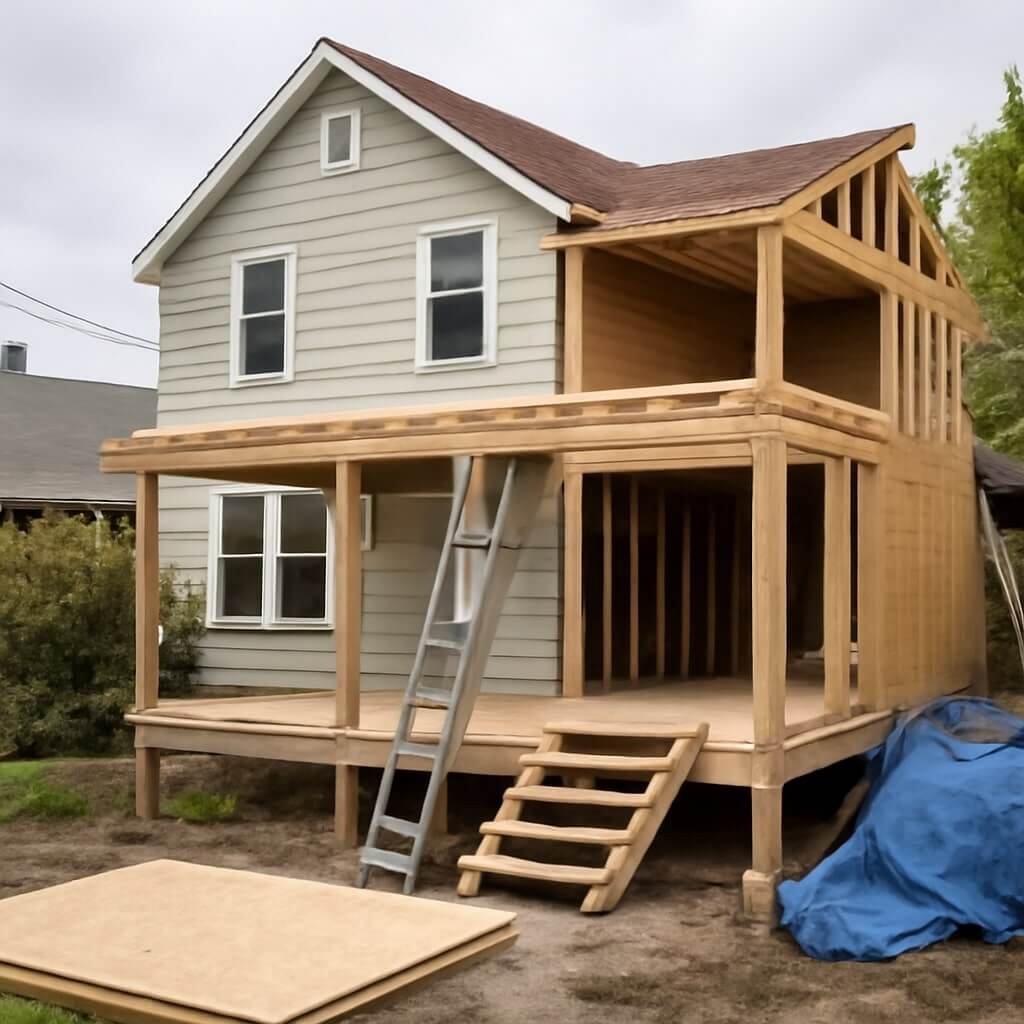
When planning a home addition in Stafford, you need to understand the local regulations that govern this process. Zoning classifications, setback requirements, and height restrictions are just the beginning. Each element can greatly impact your project’s feasibility and compliance. As you navigate these complexities, it’s essential to be aware of the necessary building permits and associated fees. What other factors should you consider to guarantee your addition aligns with community standards?
Key Takeaways
- Understand zoning classifications in Stafford to determine allowable uses for home additions and avoid violations.
- Familiarize yourself with setback requirements, typically 20-30 feet for front and 5-10 feet for sides.
- Secure necessary building permits, which may cost between $150 and $1,200, depending on the project scope.
- Be aware of height restrictions and lot coverage regulations specific to your zoning district for compliance.
- Consider environmental impact and adhere to architectural guidelines to ensure design harmony with existing structures.
Zoning Regulations and Permitted Uses
When planning a home addition in Stafford, it’s essential to understand the zoning regulations and permitted uses that govern your property.
Zoning classifications dictate how you can use your land, impacting residential, commercial, and mixed-use developments. Familiarizing yourself with these classifications will help you determine what’s allowable.
For instance, some zones may restrict the size or type of additions based on land use, ensuring they align with community standards.
Always consult local zoning maps and guidelines to avoid potential violations. Knowing these regulations beforehand can save you time, money, and frustration during your home addition project.
Building Permits and Application Process
Understanding zoning regulations is just the first step; securing the necessary building permits is equally important for your home addition in Stafford. The application timeline can vary, so it’s essential to plan accordingly. Permit fees also differ based on project scope, influencing your budget.
| Permit Type | Estimated Fee |
|---|---|
| Residential Addition | $300-$600 |
| Commercial Addition | $500-$1,200 |
| Minor Renovations | $150-$300 |
| Garage/Deck | $200-$400 |
Ensure you gather all required documents to streamline the application process and avoid potential delays.
Setback Requirements
When planning your home addition in Stafford, you must consider setback requirements, which dictate the minimum distance structures must maintain from property lines.
These rules include specific front yard setback guidelines, as well as side and rear limits that vary based on zoning regulations.
Understanding these parameters is essential to guarantee compliance and avoid potential legal issues.
Minimum Distance From Property
Setback requirements play an essential role in determining how close you can build to your property line in Stafford.
Understanding the minimum setback requirements is crucial for compliance with property line regulations. Here are three key factors to take into account:
- Front Setback: Typically ranges from 20 to 30 feet, depending on zoning.
- Side Setback: Usually requires a distance of at least 5 to 10 feet.
- Rear Setback: Often mandates a minimum of 10 to 20 feet from the back property line.
Adhering to these regulations will guarantee your home addition aligns with local standards and avoids potential legal issues.
Front Yard Setback Rules
In Stafford, front yard setback rules dictate how far your home addition must be from the street, impacting both aesthetics and safety.
Generally, these regulations require a certain distance, usually ranging from 20 to 30 feet, depending on your zoning district. This spacing not only guarantees visibility for drivers but also enhances your property’s front yard landscaping.
When planning your addition, consider aesthetic considerations, such as how the structure complements existing homes and the overall neighborhood character.
Violating setback requirements may result in fines or required alterations, so it’s essential to adhere to these regulations for a smoother approval process.
Side and Rear Limits
Understanding the side and rear setback requirements is essential for guaranteeing your home addition complies with Stafford’s zoning regulations.
Here are key points to take into account:
- Side Setbacks: You typically need to maintain a minimum distance from your property line, which varies based on your home’s height and location.
- Rear Setbacks: Similar rules apply; guarantee you meet the required distance from the back property line.
- Exceptions: Some properties may qualify for variances, but this requires additional approval.
Height Restrictions
When planning your home addition, you need to be aware of the maximum allowable building height in your zoning district.
Each district has specific height specifications that can greatly influence your project.
Additionally, existing setback requirements may further impact how tall you can build, so it’s essential to take into account these regulations in your design.
Maximum Allowable Building Height
Height restrictions play an essential role in maintaining the character and aesthetics of Stafford’s residential areas.
Understanding the maximum allowable building height is vital for your home addition project. Here are key points to reflect on:
- Maximum height regulations vary by zone, so check your specific area.
- Building code compliance guarantees safety and structural integrity, so adhere to local codes.
- Permits and approvals are often required before construction begins, confirming your project aligns with municipal standards.
Zoning District Specifications
How do zoning district specifications impact your home addition’s height restrictions?
Each zoning district type in Stafford has unique regulations that dictate maximum building heights. These specifications are determined by zoning district boundaries, which delineate areas where different rules apply.
If your property lies within a residential zone, for instance, the height limit may be lower than in a commercial zone.
It’s essential to consult your local zoning map to understand how these boundaries affect your plans. Ignoring these restrictions could result in penalties or required modifications, so make certain your home addition complies with the specific height regulations of your zoning district.
Setback Requirements Impact
While you might focus primarily on the height of your home addition, setback requirements also play an essential role in determining how tall your structure can be.
Understanding these regulations can help you navigate potential setback challenges. Consider the following:
- Minimum Distance: Setback designs dictate how far your addition needs to be from property lines.
- Height Limits: Local codes may restrict height based on proximity to boundaries.
- Aesthetic Considerations: Setbacks guarantee your addition aligns with neighborhood character.
Being aware of these factors will help you create a compliant and appealing home addition while maximizing your space effectively.
Lot Coverage and Floor Area Ratios
Understanding lot coverage and floor area ratios (FAR) is vital for anyone considering home additions in Stafford.
Lot coverage calculations determine the percentage of your lot that can be covered by structures, including your home and any additions. It’s important to know your property’s maximum allowable coverage to avoid violations.
On the other hand, floor area analysis assesses the total square footage of your home, impacting the overall density of the neighborhood.
These regulations guarantee that additions fit harmoniously within the community, so make certain to evaluate both lot coverage and FAR before proceeding with your plans.
Utility and Infrastructure Connections
When planning your home addition, understanding the permitting process for utility and infrastructure connections is crucial.
You’ll need to comply with specific requirements set by utility providers to guarantee proper service and integration with existing systems.
Familiarizing yourself with these regulations can streamline your project and prevent potential delays.
Permitting Process Overview
Before you can start your home addition project in Stafford, you need to navigate the permitting process for utility and infrastructure connections.
Understanding this process is essential to avoid delays and extra costs. Here’s what you need to do:
- Submit your application: Make sure you include the required documents and pay the application fees.
- Review the permitting timeline: Familiarize yourself with how long approvals typically take to plan accordingly.
- Prepare for inspections: Be ready for inspections at various stages to guarantee compliance with local regulations.
Following these steps will streamline your project and help you stay on track.
Utility Provider Requirements
To successfully connect your home addition to essential utilities in Stafford, you must meet specific requirements set by local utility providers. Understanding the utility service connections and the provider approval process is vital. Here’s a quick overview:
| Utility Type | Connection Requirements | Approval Timeline |
|---|---|---|
| Water | Submit application and plans | 2-4 weeks |
| Electricity | Electrical inspections required | 1-3 weeks |
| Gas | Safety compliance checks needed | 3-5 weeks |
Be certain to gather all necessary documentation to streamline your application and guarantee compliance with local regulations.
Environmental Considerations
While planning your home addition in Stafford, it’s essential to take into account the environmental impact of your project.
Implementing sustainability practices not only benefits the planet but can also enhance your property’s value.
Consider these key factors:
- Site Selection: Choose a location that minimizes disruption to existing ecosystems.
- Materials: Use eco-friendly, recycled, or locally sourced materials to reduce your carbon footprint.
- Energy Efficiency: Incorporate energy-efficient systems to lower consumption and promote sustainability.
Architectural Design Guidelines
Incorporating sustainability practices into your home addition project lays the groundwork for adherence to architectural design guidelines in Stafford.
Utilizing sustainable materials not only reduces environmental impact but also enhances your addition’s compatibility with existing structures. The guidelines emphasize achieving aesthetic harmony, ensuring your project complements the neighborhood’s character.
Pay close attention to rooflines, window styles, and exterior finishes, as these elements greatly influence visual integration. Additionally, consider landscaping that aligns with local flora, reinforcing a cohesive look.
Historic Preservation Regulations
When planning a home addition in Stafford, it’s crucial to understand and comply with historic preservation regulations, especially if your property is located within a designated historic district.
Adhering to preservation guidelines helps maintain the area’s character and guarantees your project aligns with local standards.
Here are key considerations:
- Design Compatibility: Make sure your addition complements the architectural style of the historic district.
- Material Selection: Use materials that reflect the historical context and are durable.
- Review Process: Submit your plans to the local historic commission for approval before commencing any work.
Homeowners Association (HOA) Rules
Understanding historic preservation regulations is just one piece of the puzzle when planning a home addition in Stafford.
You’ll need to be aware of your Homeowners Association (HOA) rules, which often govern architectural design and modification. Before you start, check if your addition requires an architectural review; failure to comply can lead to fines or mandatory alterations.
Additionally, be prepared to pay HOA fees, which may vary based on your project’s scope and complexity. Engaging with your HOA early in the process can help streamline approvals and guarantee your addition aligns with community standards and aesthetics.
Conclusion
Steering through local regulations for home additions in Stafford is essential for a successful project. By understanding zoning classifications, setback requirements, and height restrictions, you can guarantee compliance with community standards. It’s also critical to secure the necessary building permits and adhere to architectural guidelines. Don’t overlook environmental considerations and any HOA rules that may apply. By carefully following these regulations, you can create an addition that enhances your home while respecting the community’s aesthetic and legal framework.