
When it comes to remodelling your bathroom, choosing the right countertop can significantly affect both the aesthetics and functionality of the space. Bathroom countertops endure constant use and exposure to moisture, soap, and cosmetics. Therefore, durability should be a top priority. In this comprehensive guide, we’ll explore the most durable bathroom countertop options available, helping you make an informed decision that balances longevity, style, and budget.
Why Durability Matters in Bathroom Countertops
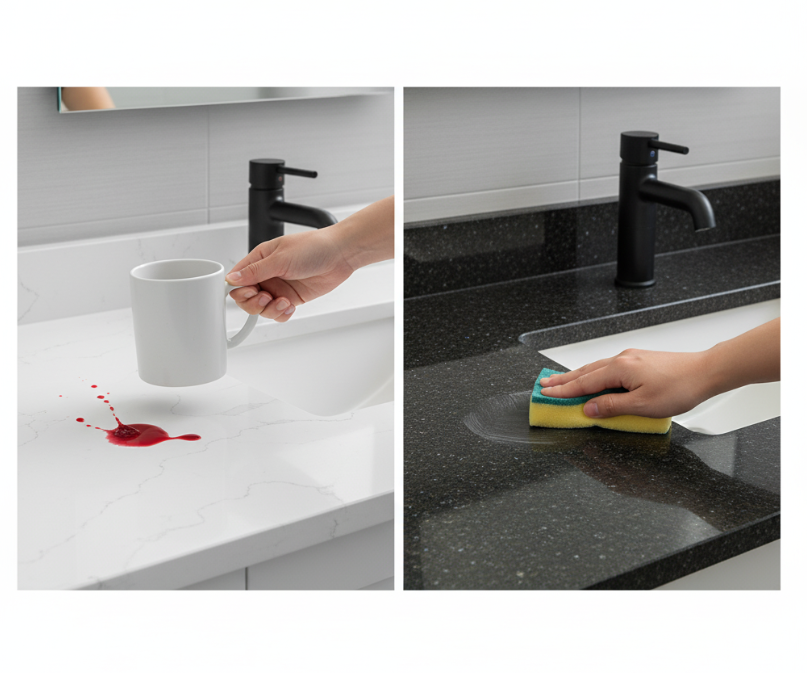
Bathroom countertops face daily wear and tear—spilled toiletries, fluctuating humidity, water splashes, and cleaning agents. A durable countertop material will:
- Resist scratches and chips
- Withstand moisture and humidity
- Require minimal maintenance
- Retain its appearance over time
Let’s examine the top materials that check all these boxes.
1. Quartz: The Leader in Durability and Style
What it is: An engineered stone made from natural quartz crystals and resin.
Why it’s durable:
- Non-porous and stain-resistant
- Highly resistant to scratches and chips
- No sealing required
Maintenance: Low; simple cleaning with soap and water.
Style Factor: Available in a vast array of colours and patterns, mimicking granite or marble.
Ideal for: Modern bathrooms where both style and durability are key.
2. Granite: Natural Strength and Luxury Appeal
What it is: A natural stone cut from quarries and polished to a high shine.
Why it’s durable:
- Extremely hard and heat-resistant
- Resistant to scratches and impact
Maintenance: Requires periodic sealing to protect against stains.
Style Factor: Unique patterns and veining; each slab is one-of-a-kind.
Ideal for: Homeowners wanting a luxurious and natural aesthetic.
3. Solid Surface (e.g., Corian): Seamless and Repairable
What it is: A synthetic blend of acrylic and polyester.
Why it’s durable:
- Resistant to moisture, mildew, and bacteria
- Seamless joints reduce water infiltration
- Can be sanded down to remove minor scratches
Maintenance: Easy to clean and maintain; occasional polishing recommended.
Style Factor: Sleek and contemporary with a matte finish; customizable shapes.
Ideal for: Contemporary bathrooms and integrated sink-countertop designs.
4. Porcelain Slab: Ultra-Durable and Modern
What it is: Kiln-fired ceramic made into large-format tiles or slabs.
Why it’s durable:
- Non-porous and impervious to water
- Highly resistant to heat, stains, and UV fading
- Does not require sealing
Maintenance: Extremely low; resistant to most bathroom chemicals.
Style Factor: Modern and available in textures resembling stone, wood, or concrete.
Ideal for: High-end, ultra-modern bathrooms or minimalist designs.
5. Concrete: Industrial Look with Custom Options
What it is: A mixture of cement, sand, and water, often customised with pigments.
Why it’s durable:
- Very strong and customizable in shape and thickness
- Can be sealed for water and stain resistance
Maintenance: Requires sealing to prevent moisture absorption and staining.
Style Factor: Raw, industrial appeal; can be cast in unique shapes and colours.
Ideal for: Industrial or rustic-style bathrooms seeking a bespoke element.
6. Laminate: Budget-Friendly with Improved Durability
What it is: A synthetic surface bonded to a particleboard core.
Why it’s durable:
- Improved resistance to scratches and moisture in modern versions
- Inexpensive to replace or update
Maintenance: Easy to clean; avoid harsh abrasives.
Style Factor: Wide range of patterns and colours, including faux-stone finishes.
Ideal for: Budget remodels and secondary bathrooms.
7. Marble: Timeless Beauty, with Extra Care
What it is: A luxurious natural stone known for its veining and elegance.
Why it’s semi-durable:
- Soft and porous; prone to scratching and staining
- Can be sealed to protect against moisture
Maintenance: High; requires regular sealing and careful cleaning.
Style Factor: Elegant and timeless; often used in upscale bathrooms.
Ideal for: Low-traffic bathrooms or homeowners prioritising visual appeal over ease of care.
Frequently Asked Questions (FAQs)
What is the most durable bathroom countertop?
How often should I seal granite or marble countertops?
Are solid surface countertops better than laminate?
Can I use kitchen countertop materials in the bathroom?
Which countertop is easiest to maintain?
Final Thoughts: Choosing the Right Countertop for You
Selecting a durable bathroom countertop involves balancing aesthetics, budget, and maintenance preferences. Quartz and granite stand out for their durability and long-term value, while solid surfaces and porcelain offer seamless modern alternatives. Budget-conscious homeowners can benefit from improved laminate options, and those looking for a unique style might lean toward concrete or marble—if they’re willing to handle extra upkeep


