
Remodelling a bathroom is one of the most rewarding home improvement projects you can undertake. A well-planned bathroom remodel can boost your home’s value, improve functionality, and enhance your daily comfort. However, without a clear roadmap, the process can quickly become overwhelming.
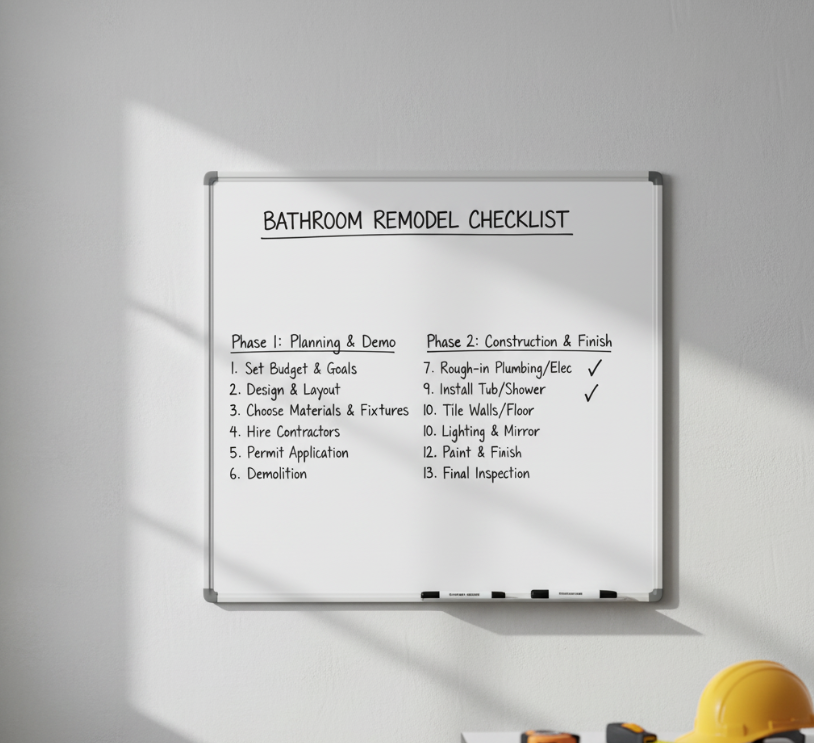
This step-by-step bathroom remodel checklist is designed to guide you through every stage of the process—from initial planning to the final polish—ensuring your project stays on track, on budget, and stress-free.
Step-by-Step Bathroom Remodel Checklist
1. Set Your Remodelling Goals
Before touching a single tile, clearly define your remodelling goals. Ask yourself:
- What are the primary reasons for remodelling? (e.g., aesthetics, functionality, resale value)
- Who will be using the bathroom?
- What features are must-haves?
Setting clear goals will help you prioritise and stay focused throughout the project.
2. Establish a Realistic Budget
Determine how much you’re willing to invest in your bathroom remodel. Be sure to:
- Factor in both materials and labour
- Include a 10-15% buffer for unexpected costs
- Consider financing options if needed
A well-planned budget helps guide material choices and prevents overspending.
3. Measure and Plan the Layout
Accurate measurements are critical to avoid expensive mistakes later. Record:
- Room dimensions (length, width, height)
- Placement of plumbing, electrical outlets, and windows
- Existing fixture sizes
Use this information to sketch a basic layout or work with a designer to reconfigure the space.
4. Hire Professionals or DIY?
Decide which parts of the remodel you’ll tackle yourself and which require professionals. For major plumbing, electrical work, or permits, licensed contractors are often required.
When hiring professionals:
- Get multiple quotes
- Check licenses, insurance, and references
- Sign a detailed contract
5. Select Design and Materials
This is where your vision comes to life. Choose:
- Tiles (floor, shower, backsplash)
- Vanity, countertops, and sink
- Toilet, tub, or shower unit
- Lighting and mirrors
- Faucets and fixtures
- Paint colours and accessories
Balance aesthetics with durability, especially in high-moisture areas.
6. Order Materials in Advance
To avoid project delays:
- Order all major materials and fixtures ahead of time
- Verify lead times for custom items
- Check deliveries immediately for damage or errors
7. Obtain Necessary Permits
Check with your local municipality to see what permits are required. Common ones include:
- Plumbing
- Electrical
- Structural changes
Failure to get proper permits can lead to fines and complications when selling your home.
8. Demolition
Before demolition:
- Turn off the water and electricity
- Protect other areas of your home from dust
- Remove fixtures, tiles, and cabinetry carefully (some items may be reused or donated)
9. Plumbing and Electrical Rough-Ins
With walls and floors open, professionals will:
- Reroute or update plumbing lines
- Install new electrical wiring, outlets, and lighting circuits
- Add vent fans or heated flooring
This stage sets the foundation for your new bathroom’s infrastructure.
10. Install Walls and Flooring
After plumbing and electrical inspections:
- Install moisture-resistant drywall or cement board
- Apply waterproofing membranes in wet areas
- Lay flooring (tile, vinyl, or other materials)
Ensure surfaces are level before proceeding to avoid installation issues.
11. Install Fixtures and Features
This includes:
- Bathtub, shower, or combination unit
- Vanity and sink
- Toilet installation
- Lighting and mirrors
- Cabinets and storage
All items should be securely fastened and sealed properly.
12. Paint and Final Touches
Use mould- and mildew-resistant paint. Then:
- Touch up caulking and grout
- Install towel bars, hooks, shelves, and accessories
- Thoroughly clean the area
This step polishes your project and makes it fully functional.
13. Final Inspection and Walkthrough
If permits were required:
- Schedule a final inspection
- Ensure all codes and standards are met
Do a personal walkthrough to check for:
- Leaks
- Fixture alignment
- Finish quality
Create a punch list and resolve any issues before marking the job complete.
FAQs About Bathroom Remodelling
How long does a typical bathroom remodel take?
How much does it cost to remodel a bathroom?
Do I need a permit to remodel my bathroom?
Can I remodel a bathroom myself?
What adds the most value to a bathroom remodel?
Conclusion
Remodelling a bathroom doesn’t have to be a stressful experience. With a clear plan, thoughtful budgeting, and attention to detail, your project can result in a stunning space that meets your lifestyle needs and adds real value to your home. Use this bathroom remodel checklist as your blueprint to a successful renovation journey.


